
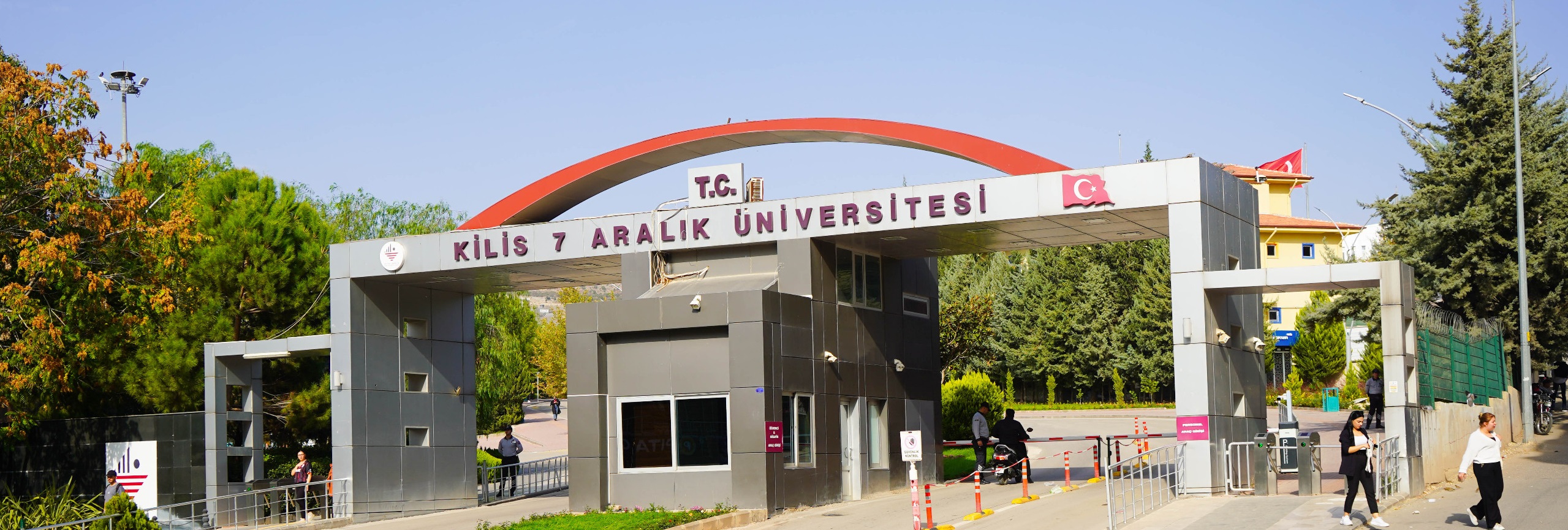
By the decision of the Executive Board of the Council of Higher Education dated December 25, 1998, four departments—namely the Department of Primary Education, the Department of Turkish Education, the Department of Educational Sciences, and the Department of Computer Education and Instructional Technologies—were established within our Faculty. The Division of Turkish Education, operating under the Department of Turkish Education, commenced its educational activities in the 2001–2002 academic year with an initial cohort of 40 students and graduated its first students in 2004.
Bachelor’s Degree in Turkish Language Teaching
Applicants are required to hold a high school diploma or its equivalent and to obtain a sufficient score on the national university entrance examination. Students who have previously enrolled in an equivalent program, either domestically or internationally, may apply for horizontal transfer or student exchange programs.
Graduates who fulfill the necessary requirements—such as obtaining a valid score from the Academic Personnel and Graduate Education Entrance Examination (ALES), demonstrating sufficient proficiency in English, and successfully completing an interview—may pursue postgraduate studies.
Students must successfully complete all courses required by the curriculum, meet the minimum credit requirements, and achieve a cumulative grade point average (CGPA) of at least 2.00 out of 4.00.
Graduates of the Turkish Language Teaching program may work as teachers in public and private secondary schools affiliated with the Ministry of National Education, as well as in private educational institutions. They may also find employment in media organizations, educational and cultural institutions abroad, archives, museums, centers of Turkology worldwide, institutions related to Turkic Republics, and academia.
Examinations are graded out of 100 points. The weighting of midterm and final examinations in the calculation of the final grade is determined by the relevant academic boards, taking into account the nature of the course. Additionally, instructors are required to inform students at the beginning of the semester about the course content, assessment criteria, required resources, and office hours.
In accordance with the decision of the Executive Board of Higher Education dated November 4, 1997 (No. 97.39.2761), a restructuring process was initiated in Faculties of Education. Within this framework, the Division of Social Studies Education was established under the Department of Primary Education in our Faculty. The program began admitting students in the 2002–2003 academic year.
The Social Studies Teaching Program is an undergraduate program within the Department of Turkish and Social Sciences Education. The curriculum includes compulsory courses, field knowledge courses, pedagogical courses, general culture courses, and practicum components. Additionally, students are required to take elective courses in general culture, field education, and professional teaching knowledge.
Courses are delivered both theoretically and practically. Theoretical courses are supported by technology-enhanced learning environments, while practical courses are conducted over two semesters in cooperation with the Faculty of Education, the Provincial Directorate of National Education, and practice schools, under the supervision of academic staff and mentor teachers.
The program primarily includes courses derived from History, Geography, and Citizenship Education, along with other social science disciplines.
The primary aim of the program is to equip students with the fundamental knowledge, skills, and values required of a social studies teacher. It seeks to educate prospective teachers who internalize the values of the information society, produce and apply knowledge in the field of social studies, continuously improve themselves, and address educational issues through scientific methods.
General admission requirements apply to both domestic and international students.
Students who have previously studied at another higher education institution, either domestically or abroad, may apply for credit and grade transfer within the first week following enrollment. These applications are evaluated and decided upon by the relevant academic board, covering the entirety of prior education and limited to a one-time process.
Graduates who successfully complete the undergraduate program and meet the admission requirements of graduate programs may pursue further studies. These requirements are announced on the official websites of the respective universities.
To graduate, students must:
Graduates are expected to:
Various assessment methods are employed, including midterm exams, assignments, projects, practical applications, and final exams. These may involve written exams, multiple-choice tests, performance assessments, and product evaluations. To graduate, students must achieve a minimum cumulative GPA of 2.00. Course grades are assigned in letter form based on overall performance.
Graduates may work as social studies teachers in public and private secondary schools or in various positions within the public and private sectors.